Year of the Fire Horse 丙午 Wuyun Liuqi Part II: 六氣 Liu Qi
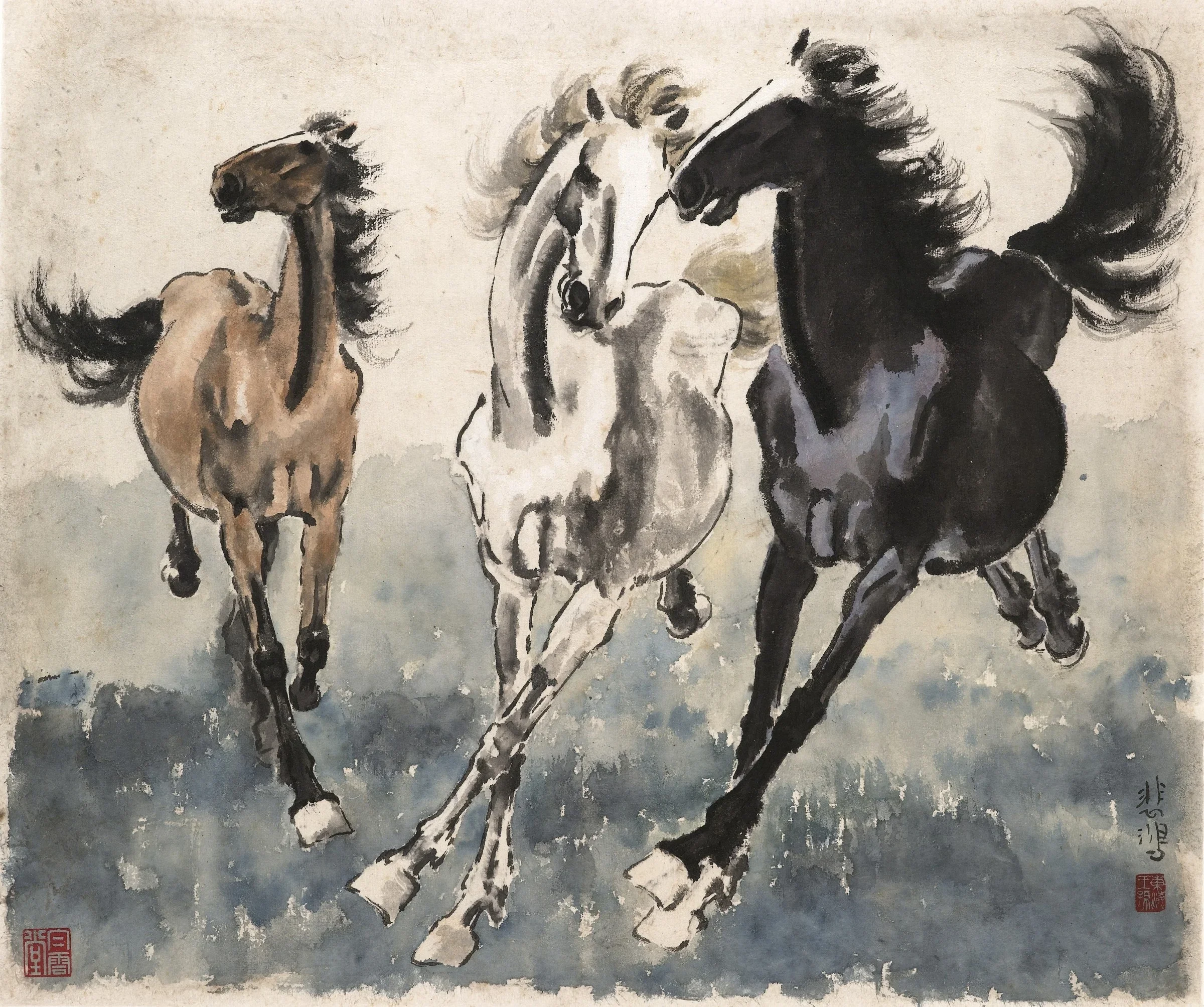
brush painting by 20th-century Chinese master Xu Beihong
Welcome to Part II of the annual Wuyun Liuqi blog for the year of the Fire Horse 丙午 2026. Part I covers the Wuyun, or yearly energetic patterns of the Fire Horse. In this blog we turn to the 六氣 Liuqi for a month-by-month look at health and climate in the coming year along with seasonal dietary, herbal, and lifestyle resources. A symbolic reading of the Fire Horse Year can be found Here.
The 六氣 Liuqi, or “Six Qi,” is a map of climate and health, divided into six seasonal “Qi Periods” with specific predictions for climate and health in each. In contrast to the Wuyun, which looks at overall weather for the year, the Liuqi describes specific patterns of unseasonal weather month-by-month. Liuqi weather patterns are generally milder in presentation, but over time can severely disrupt local climate and ecology leading to larger, extreme climate events as well as causing significant impacts to human health.
For an example, let’s take a brief look back at the year of the Wood Snake. The Liuqi calendar predicted unseasonal winter warmth from October 2025 -January 2026. Where I am writing from in Portland, Oregon, we did have an abnormally warm winter, with associated environmental and health issues following. The Wuyun Liuqi health guidelines can be immensely supportive of wellbeing in such instances of unseasonal weather. My hope is to empower others to take notice of unseasonal weather patterns and use the tools contained in this Classical Chinese Medical system to keep their families, communities, and patients healthy in the rapidly changing climate of our age. Check back in seasonally with this blog to see how climate is lining up to the Liuqi map where you live, and use the dietary recommendations and recipes as needed.
Now let’s jump right in with a look at the Liuqi for the coming year:
六氣 Liuqi
Host and Guest
The Liuqi system describes six “Qi Periods” of the year, which are seasonal periods with associated weather patterns very much like the four seasons: spring is wet, summer is hot, fall is dry, winter is cold. Each year, regular seasonal climates play “Host” to visiting “Guest” climates, which occur out of season and cause irregular weather.
Each year there are two particular “Guests” that have most effect on climate and health. The first, known as the Guest “Ruling Heaven,” governs weather in the first half of the year primarily, although it has some influence for the entire year. The second half of the year is governed by Guest “Ruling Earth,” disrupting the normal flow of seasonal weather through fall and winter.
It is important to note that the Wuyun Liuqi calendar begins on January 20th with Major Cold 大寒 .
Luiqi Yearly Climate
In the first half of Fire Horse year, Shaoyin Fire “Rules Heaven,” creating overall climate conditions of heat. Unseasonably warm weather in the spring and early summer can result in epidemic illnesses with fever, cough, chest congestion, body aches, and mental agitation. If spring rainstorms arrive along with this heat, digestion can be affected, with additional symptoms of water retention, bloating, and difficult urination.
In the second half of the year, Yangming Dryness “Rules Earth,” indicating climate patterns of dryness, cold and fog throughout autumn and winter. This weather can dry out the skin and lungs causing breathing difficulties, throat dryness, and an ashen appearance due to the skin losing its luster.
Year of the Horse Dietary Strategy
According to the Wuyun Liuqi, each year has a pair of flavors and temperatures for dieta and herbal health strategies in the first and second half of the year, respectively. This can be a educational way engage with health in the coming year, learning new recipes and incorporating seasonal staple foods to better understand the way food can play a role in health, season by season. In Horse years, the protocols are as follows:
Staple Foods:
Below is a list of staple foods to incorporate in the coming year.
Grain - 稷米 “broomcorn” millet.
Legume - beans, specifically adzuki, black beans and black soybeans, all of which have particular affinity with the Kidneys.
Meats - are pork (salty and cool) and beef (strong spleen/digestive tonic, builds blood)
Fruits & Nuts - chestnuts (Kidney tonic) and red dates (builds digestion and Heart blood).
All of these yearly tonify the Kidney, Spleen, and Stomach, supporting the root of the body’s energy and strengthening digestion. These are great food to incorporate into diet throughout the year, combining with specific seasonal flavors and preparations listed below:
Seasonal Dietary Strategy
In the first half of the year (January through July):
In the Liuqi system, Salty and Cold foods are indicated to ward off the Heat of the first half of the year. This does not mean an increase in dietary salt, but instead consuming foods with a salty nature, such as kelp, seafood, and pork. Ming Dynasty commentator Zhang Jiebin advises incorporating the Sour flavor into your diet for the first half of the year, because the Dryness in the latter half of the year poses the greatest threat to our health, specifically Lung health. The Sour flavor astringes fluids and nourishes Yin, keeping our body tissues from drying out and strengthens the Lungs.
Adding the Sour flavor to your diet can look like adding fermented foods to your diet. Salty foods include Fish, Kelp, Pork and Millet. Most fruit is cool/cold and sour, so eating fresh fruits when in season, or adding frozen berries to oatmeal combines both the flavor and temperature of the first part of the year. In terms of food preparation, steaming and poaching adds a cool nature and strengthens digestion. A perfect combination of Salty, Cool and Sour is Sushi, an elegant example of food-as-medicine for the first half of the year.
For the second half of the year (July - January 2027):
The Sour flavor and Warm temperature are recommended to harmonize the excessively cool and dry climate ruled by Yangming Dryness in the second half of the year. In terms of diet, Umeboshi Plums are a perfect food to experiment with in the latter half of the year. Naturally Sour and Warming, Umeboshi can be made at home or bought in stores as whole plums or as a paste that can be added to rice dishes, soups, or vegetables for a salty, sour kick. Adding lemon juice to warming stews like lentil soup or Squash and Adzuki Bean Curry brings a bright burst of sour that draws the warming moisture of vegetables and beans in to nourish the tissues. Try having 1-2 dishes a week with this flavor combination and notice if your skin and lungs feel less dried out than usual during the dry and chilly autumn and winter.
In cases of extreme heat during the second half of the year (Fire’s “Uprising” and Earth’s “Revenge” from the Wuyun), the Bitter flavor can be used to drain heat. Bitter Melon, radicchio, arugula, and mustard greens can be made braised or added to soups to achieve this effect. Don’t forget about the yearly staple foods, as well!
Special Considerations:
Extreme Weather Events: The Wuyun of the year indicates the possibility of extreme weather events of Cold, Frost, and Rain, especially in the first half of the year and again in winter. For these moments, it is advised to use the Salty flavor and Hot temperature. Extreme cold can affect the Shaoyin network of Heart and Kidneys, and the Salty flavor supplements Kidneys and softens conglomerations that can form due to cold. Foods that are Hot in nature warm the body to counteract the effect cold. As an example, Sichuan Boiled Fish Shui Zhu Yu, 水煮鱼 combines the Salty nature of fish with pungent and hot spices to drive out cold. In terms of preparation, roasting and grilling adds heat to any dish.
Wildfires: July-October is also the time when the Wuyun predicts wildfires are likely to break out, with smoke events creating extreme symptoms of dryness and heat. This will be the subject of a seasonal blog this summer, so check back before “Wildfire Season” for more information on staying healthy during smoke events.
Keeping these considerations in mind, let’s explore a month-by-month calendar of climate and seasonal health in the coming year, with dietary guidance and recipes for every season.

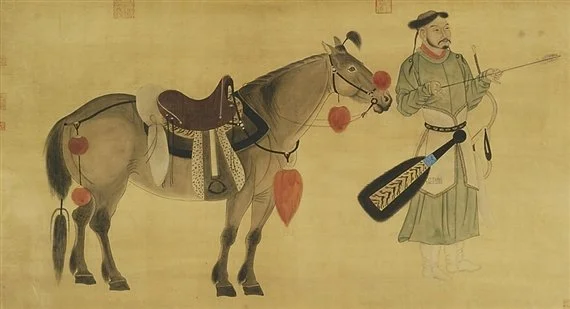
Zhao Mengfu 趙孟頫 - Groom and Horse - Yuan Dynasty
Liuqi Seasonal Climate Calendar
1st Qi Period: Jan 21st - March 20th
Host Climate: Jueyin Wind | Guest Climate: Taiyang Cold
Effect on Climate: The unseasonal winter warmth of the previous year comes to an end. Freezing temperatures return, killing early blooms. Wind mixes with frost to create unpleasant conditions. Animals stay hidden and people remain indoors.
Health Effects: Cold and wind cause joint pain and stiffness. Low back and hip pain can develop as the kidneys are harmed by cold, with fever and communicable diseases spreading. Prolonged Wind/Cold exposure can damage Yang Qi at the surface, worsening dry, cracked skin, coughs, and respiratory conditions.
Remedy: Be mindful of exposure to the elements during this time period. Wear a scarf, avoid the wind, and eat baked apples/pears to keep the joints supple, support the digestion, and warm the body. Congee/Jook is a great breakfast at this time. If weather becomes unseasonably warm, go out for some sushi to achieve the seasonal dietary prescription of cool and salty foods.
2nd Qi Period: March 21st - May 21st
Host Climate: Shaoyin Fire/Light | Guest Climate: Jueyin Wind
Effect on Climate: Warming weather and lengthening days meet, with wind continuing to bring in colder weather. Overall, this is a harmonious time period, where the policy of Spring growth can develop smoothly. Plants and animals flourish.
Health Effects: There is a tendency to develop urinary issues and red, irritated eyes along with internal sensations of heat.
Remedy: Continue to keep your neck covered when outside, as sudden cool winds can give you a chill. It is important to get regular exercise to keep your qi moving and avoid internal stagnation and restraint. Exercise outdoors when weather permits, but be judicious, and stay inside if you are feeling unwell or the weather is cold. For Practitioners: Keep some Xiao Chaihu Tang on hand, to be used in appropriate circumstances. Especially useful is the modification replacing Huangqin/Scutellaria with Fuling/Poria to help with urinary difficulties.
3rd Qi Period: May 22nd - July 21st
Host Climate: Shaoyang Heat | Guest Climate: Shaoyin Fire/Light
Effect on Climate: The heat of summer establishes itself early. The climate is warm, plants and animals are abundant. The Excess Water of the Wuyun may have one last gasp before winter, “oppressing” summer Fire and causing late-season cold snaps or storms.
Health Effects: Internal heat causes upper-body symptoms of chest pain, alternating chills and fever, coughing, wheezing, panting, and red eyes. Internal heat becomes constrained and severe, affecting the Lungs.
Severe Illness and Epidemic Disease: In the entire first half of the year there is the potential for epidemic and severe illness to develop. The patterns for these diseases are determined Shaoyin Fire as the Guest “Ruling Heaven.” These appearance of these illnesses are preceded by sudden heatwaves or unseasonal warmth, and are characterized by shortness of breath, vomiting, fever with chills, sneezing, nasal congestion, and nosebleeds. In severe cases, sores can develop on the skin and ulcerations in the mucous membranes, indicating pathogenic heat has pervaded the lungs.
Remedy: Salty and Cold foods are recommended for this time period when there is excessive heat. Seaweed salad is a great choice - salty, cool seaweed softens constrained heat and cools the body. Chrysanthemum is a good herb to have handy to make sun tea during heat waves. Steamed fish is a good choice for a simple, cooling staple to work against chest constraint.
4th Qi Period: July 22nd - September 23rd
Host Climate: Taiyin Damp | Guest Climate: Taiyin Damp
Effect on Climate: Hot and humid conditions characterize mid-to-late summer. As Dampness is both Guest and Host, summer rainstorms are indicated, with intermittent cool, dry weather due to the influence of Yangming Dryness Ruling Earth throughout the second half of the year.
This is also the time of the year when Earth can take “Revenge” against Water if there have been extreme climate events of cold and frost in the first half of the year, causing flooding from late snowmelt and rainstorms mentioned above. Classically, this is described as such intense rain that reptiles, frogs, and all manner of “scaly creatures” get flooded out and are visible on land.
Health Effects: Damp-Heat is the primary pathogenic factor here, causing illnesses of high fever with chills or vomiting of fluids. Early season dryness can lead to nosebleeds and dry throat. If there are massive rainstorms characterizing Earth’s Revenge, all of this environmental dampness can lead to fluid stagnation in the body. Symptoms of cough with phlegm in the chest, aching body, food stagnation with bloating, and the spread of viral illness characterized by vomiting without high fever (Norovirus) and diarrhea (Rotavirus).
Remedy: The Bland flavor is said to “percolate dampness,” so apart from avoiding excessive sun exposure in the heat, the best at-home remedy for this time period is again Congee or Jook. Simple rice porridge made with 6-8 cups of water and 1 cup of rinsed rice or millet will make a nice bland porridge that can help clear heat and drain damp. Millet Congee with a dollop of honey is a great option in the case of a dry throat.
In the case of heavy rains and flooding, the Bitter flavor can help drain dampness and heat more powerfully. This is a perfect season for bitter melon (Kugua 苦瓜), which is commonly used in Cantonese cooking as in Pork Rib and Bitter Melon Soup, which combines the bland, water-percolating effect of pearl barley (Yiyiren 薏苡仁) with the dampness-draining and cooling bitterness of bitter melon.
5th Qi Period: September 23rd - November 21st
Host Climate: Yangming Dryness | Guest Climate: Shaoyang Heat
Effect on Climate: The heat of late summer continues into autumn, with warmer-than usual temperatures causing plants and animals to continue to flourish late into the season. More forest fires are possible, along with autumn heatwaves.
Health Effects: People are generally healthy and content with the warm weather, but epidemic diseases can develop.
Remedy: Continue to move with the gesture of autumn even as it is unseasonably warm. The recommendation for Sour and Warm foods is a good dietary benchmark. Roasted squash, apples, pears, and 햇김치 Fresh Kimchi or other quick pickles of autumn veggies are all great ways to prepare for the coming cold.
6th Qi Period: November 22nd - January 20th 2026
Host Climate: Taiyang Cold | Guest Climate: Yangming Dryness
Effect on Climate: Cold and dry climate conditions prevail. Frequent frosts and chilling temperatures cause dense fogs. This weather arises suddenly after a warm autumn, giving the cold an even more intense effect.
Health Effects: The heat from earlier in the season smolders internally, causing heat obstruction and counterflow leading to pain in the sides, coughing, panting, and nosebleeds. Skin and connective tissue diseases also express trapped heat above with cold below, leading to poor digestion, distention, and edema.
Remedy: The Salty and Cool nature of Pork is a great way to support the Kidneys and digestion while unblocking trapped heat. As this time period has a picture of more extreme health patterns developing, it is also suitable to employ the Bitter flavor, which can be achieved by adding blanched bitter winter greens such as dandelion or mustard greens to Hot and Sour Soup, which brings the seasonal flavors of Sour and Warm to balance the effect and taste of bitterness.
What is needed is to clear heat from the body and unblock stagnation, while also being mindful of the extreme seasonal cold. Therefore, overly cold foods are not suitable, following the maxim in Neijing Suwen Chapter 71, “when employing cold [foods] stay away from cold.” We don’t want to double down on a cold strategy while there is also excessive environmental cold.
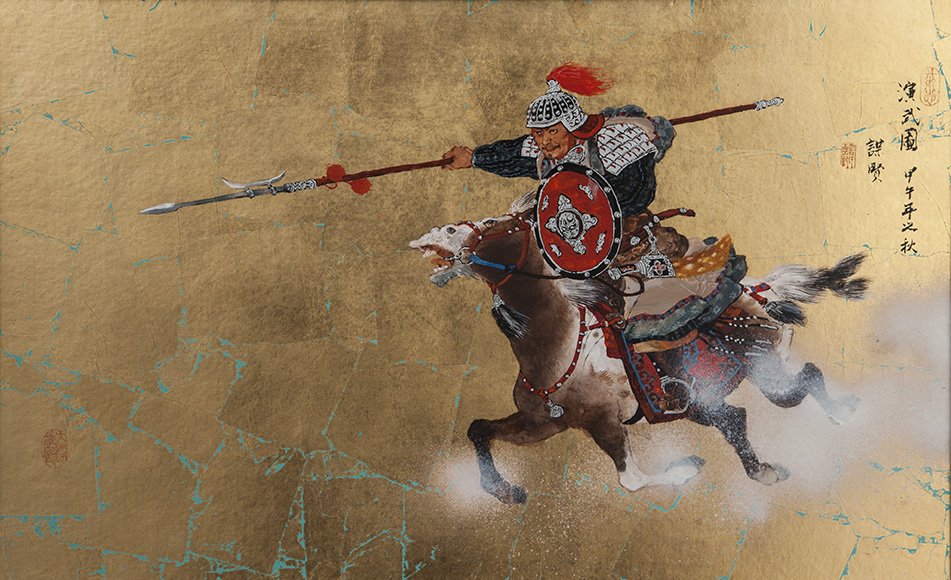
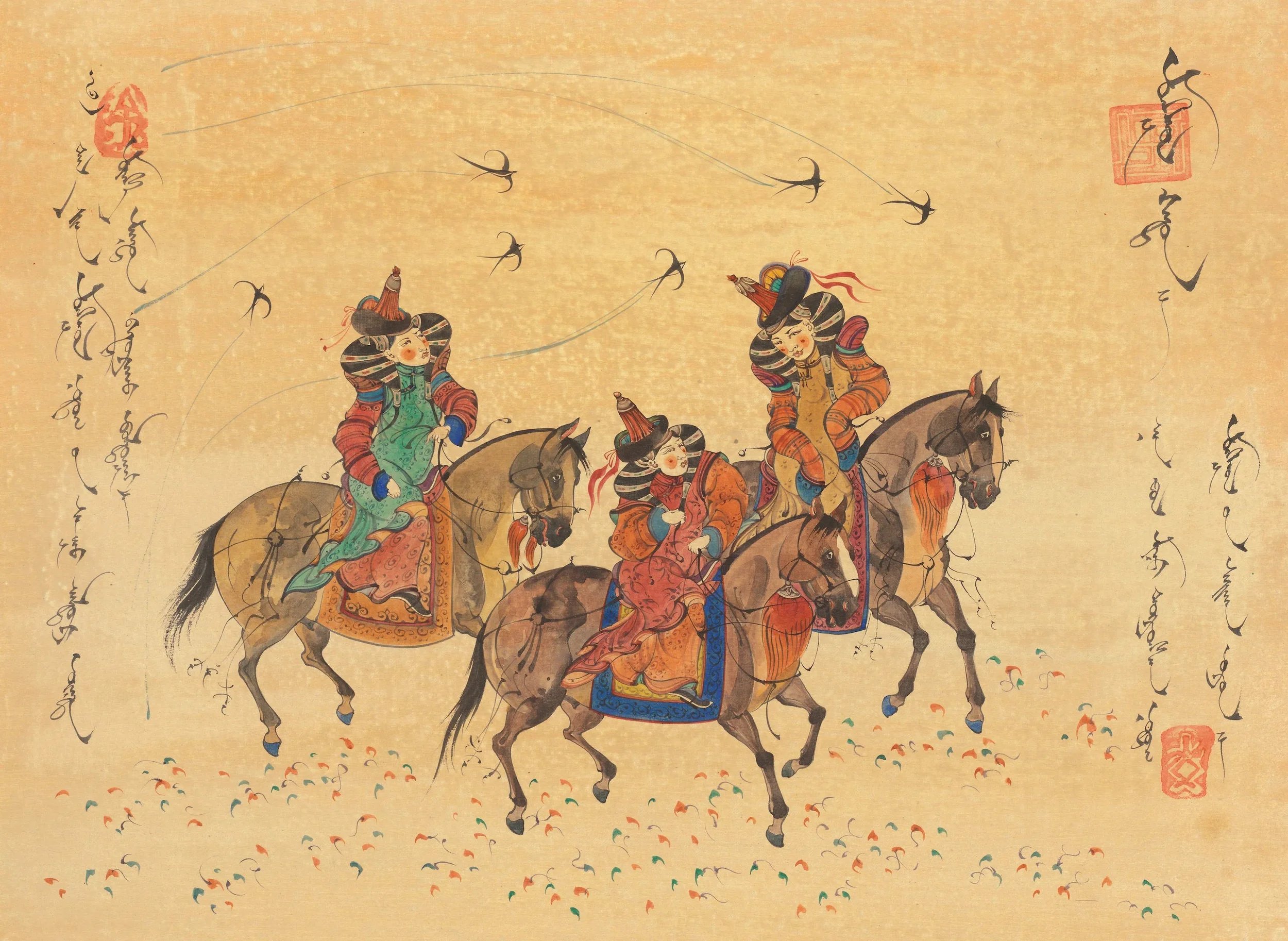
Mou-Sien Tseng - Mongolian Warrior
This concludes the main discussion of yearly climate, health, and diet. Thank you to all of those who have read this far and put this information to use! To conclude, we will take a close look at a yearly herbal formula with seasonal modifications. This section is intended primarily for students and practitioners of East Asian Herbal Medicine.
Yearly Formula with Seasonal Modifications
The Song Dynasty text 三因極一病證方論 “Discourse on the Ultimate Source of Disease and It’s Treatment” outlines a yearly formula based on the Liuqi.
Year of the Horse Herbal Formula
Formula Name: 正陽湯 Zhengyang Tang “Upright Yang Decoction”
Treatment Principle:
This formula uses a combination of seasonally prescribed flavors: Salty to unblock & descend counterflow, Bitter to treat interior heat, and Sour to astringe Yin. A combination of Warm and Cool herbs are added seasonally to modify the nature of the formula according to Liuqi seasonal weather patterns.
Indications:
This formula is for use in the Year of the Horse or Rat, when Shaoyin Fire rules heaven and Yangming Dryness rules earth. Treats stiff joints, low back pain (1st Qi), qi stagnation with heat, urinary disturbances, red eyes (2nd Qi), heart pain, alternating chills and fever, coughing and wheezing (3rd Qi), nasal congestion, dry throat with vomiting of fluids, jaundice (4th Qi), wheezing; in severe cases, extending to the lower abdomen with cold in the center (Final Qi).
Ingredients: (equal parts - dosage given at 18g each)
Baiwei 白薇 (Cynanchum atratum)
Bitter, Salty; Cold
Clears heat (internal/deficiency heat), cools blood, promotes urination.
Xuanshen 玄參 (Scrophularia ningpoensis)
Sweet, Bitter, Salty; Cold
Clears heat and cools blood (ying/blood level), relieves toxic heat
Danggui 當歸 (Angelica sinensis)
Sweet, Pungent, Bitter; Warm
Tonifies Blood and promotes circulation (moves blood).
Chuanxiong 川芎 (Ligusticum chuanxiong)
Pungent; Warm
Moves blood and qi, dispels wind, alleviates pain.
Sangbaipi 桑白皮 (蜜炙) (Morus root bark, honey-fried)
Sweet; Cold
Clears lung heat. Tonifies Lung Qi. Relieves wheezing, cough; promotes urination, drains edema.
Shaoyao 芍藥 (Peony root, white or red as appropriate)
White Peony (Baishao 白芍)
Bitter, Sour; Cool
Nourishes blood, astringes Yin, calms liver yang; relaxes abdominal tension
Red Peony (Chishao 赤芍)
Bitter; Cool
Cools blood, resolves blood stasis to treat fixed abdominal pain.
Xuanfuhua 旋覆花 (Inula flower)
Bitter, Pungent, Salty; Warm
Resolves Counterflow, clears phlegm, stops vomiting, treats cough with chest fullness and copious phlegm
Shengjiang 生薑 (Fresh ginger)
Pungent; Warm
Disperses cold, warms stomach, stops vomiting and transforms phlegm.
Zhi Gancao 炙甘草 (Honey-friend Licorice)
Sweet; Neutral
Tonifies Spleen qi, moderates other herbs by creating a thicker medium for the formula to move more gently and uniformly.
Classical Instructions: Grind all ingredients into a powder. Boil 12g of herbs in 1.5 cups of water until reduced to 1 cup. Strain, take before meals.
Formula Architecture
The overall strategy of this yearly formula is to drain deficient heat from the Lungs while tonifying blood and moistening to prevent damage to body fluids and supporting digestion.
This formula draws on several classical formula strategies, including Si Wu Tang 四物汤, as it includes three of the four original herbs for tonifying blood: Danggui, Chuanxiong, and Shaoyao. In this formula, these herbs helps to relieve pain and clear stagnating heat by cooling and moving the blood.
The high recommended dosage suggests this formula is best applied for acute illness, and not to be taken as a preventative or constitutional remedy. Taking this formula in excess can damage the spleen and lead to internal cold, phlegm, and stagnation. This formula is presented here as an example herbal strategy for illnesses corresponding to potential climate factors for the year. Always consult a licensed professional before self-administering herbs.
Seasonal Modifications
1st Qi Period: Add one part (18g) Xingren (Apricot kernel) and Shengma (Cimicifuga).
The inclusion of these herbs emphasizes descending Lung Qi to stop cough with Xingren, but the inclusion of Shengma suggests a surface-level condition of Wind-Heat, creating a multi-directional effect: releasing heat at the surface while also strongly draining internal Lung Heat.
Heat-Toxins at the surface: skin eruptions with hot, irritated rash. High fever, severe cough or wheezing. Acute presentation, like a virus (Measles)
2nd Qi Period: Add 18g each Fuling (Poria) and Cheqianzi (Plantago seeds)
This changes the formula to target Damp, presenting here as Damp-Heat in the Lungs leading to phlegmatic cough, inhibited urination, and diarrhea. Heat is still the predominant factor, and Fuling helps by draining damp while also tonifying the Spleen to protect against the cold nature of the formula.
Phlegm-Damp and Heat affecting the lungs: shortness of breath with cough, sticky yellow phlegm. Skin conditions with damp-heat predominance: weeping psoriasis or eczema. Painful, dark, and scanty urination with possible genital itching
3rd Qi Period: Add Xingren and Maren (Cannabis seeds), each 1 fen* (*this amount seems very small, but that is how it is written).
Focus is now on the Lung/Large Intestine network, with Large Intestine heat drying out the bowels and possibly creating a dry cough. Maziren moistens and unblocks bowels while Xingren assists in moistening and descending Lung qi.
Chronic dry cough presenting with or after a high fever. Constipation, skin conditions with predominant dryness.
4th Qi Period: Add Jingjie (Schizonepeta) and Yinchenhao (Artemisia capillaris), each 1 fen.
This takes the formula in a completely new direction, venting heat at the exterior again with Jingjie to disperse Wind-Heat and vent rashes. Yinchenhao works to clear Liver/Gallbladder Damp Heat, indicating the pattern has moved from the Lung. The presence of Shaoyang Heat visiting during this Qi Period indicates a stagnation of ministerial Fire causing an increase of dampness affecting the Shaoyang Gallbladder.
Symptoms include: fever, dark urine, itchy or purulent skin rashes, nausea, chest fullness, and headache.
5th Qi Period: Use the base formula as is.
Symptoms: Dry cough, tidal fever, restlessness.
6th Qi Period: Add Zisuzi (Perilla fruit), 0.5 liang.
Zisuzi brings a warm and moistening effect to the formula, which now targets Phlegm in the Lungs (compared to Lung/Large Intestine Dry Heat as was the case in the 3rd Qi Period).
Symptoms can include: Productive cough with dense, yellow phlegm or wheezing, inability to expectorate phlegm trapped in the Lungs and a feeling of chest congestion. Still underlying patterns of deficiency heat with dryness and skin irritation.